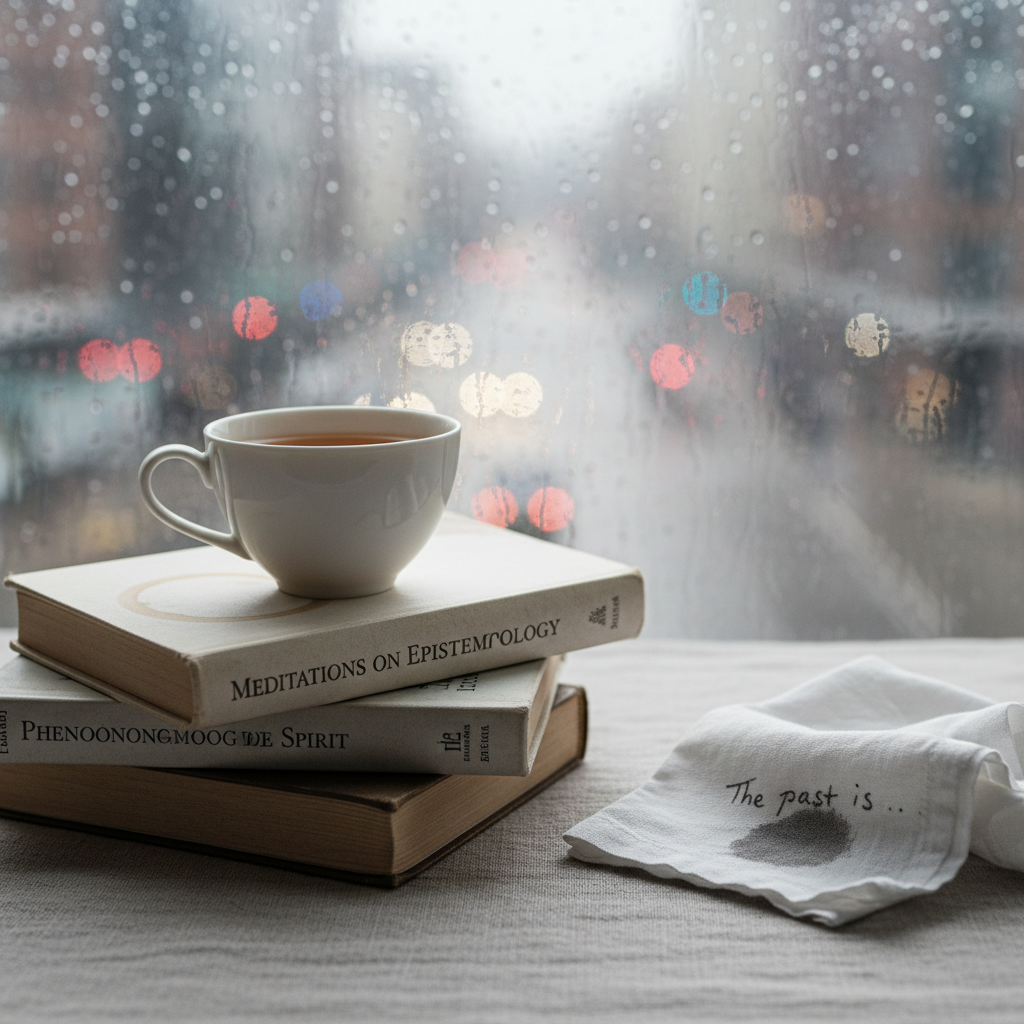
A delicate porcelain teacup, half full and cooling, sits on a small stack of dog-eared philosophy books atop a linen-covered table. A faint tea ring mars the top cover of the upper book, and a napkin with a smudged, abandoned sentence lies nearby. Outside a rain-streaked window in the background, city lights blur into soft bokeh. Gentle overcast daylight diffuses through the glass, giving everything a muted, silvery tone, with subtle highlights glancing off the cup’s rim. Photographic realism, composed using the rule of thirds from a side angle, creates a sophisticated, introspective mood, evoking the quiet elegance of reflection on mistakes, memory, and meaning.

Failing Well

A memoir of missteps, memory, and meaning, tracing grace through the cracks of ordinary life.

About

Learning to Fail on Purpose

This memoir traces the strange ways memory edits, distorts, and occasionally heals a life, weaving personal stories with philosophical questions and gentle spiritual inquiry, for readers curious about how our failures keep teaching us to begin again.
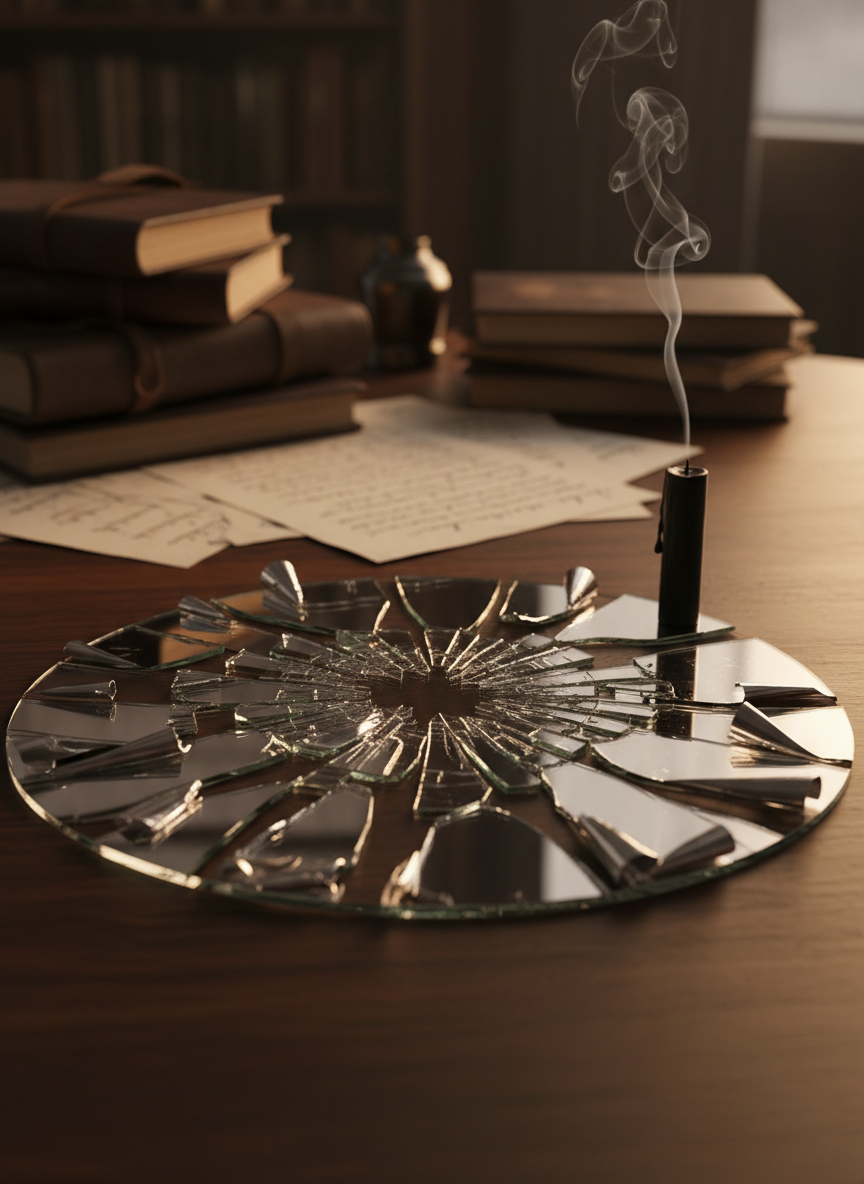
A fractured mirror lying flat on a dark wooden table, each shard reflecting a slightly different angle of a cluttered study: stacks of notebooks, scattered pages, a single extinguished candle leaving a thin curl of smoke. The mirror’s silver backing peels at the edges, catching the warm glow of a desk lamp placed just out of frame, creating subtle rim lighting on the shards and deep, layered shadows between them. Photographic realism with a dramatic, low-angle close-up emphasizes the sharp edges and intricate reflections, while the background falls into gentle blur. The atmosphere is contemplative and sophisticated, suggesting memory as a collection of imperfect fragments and beautiful failures.
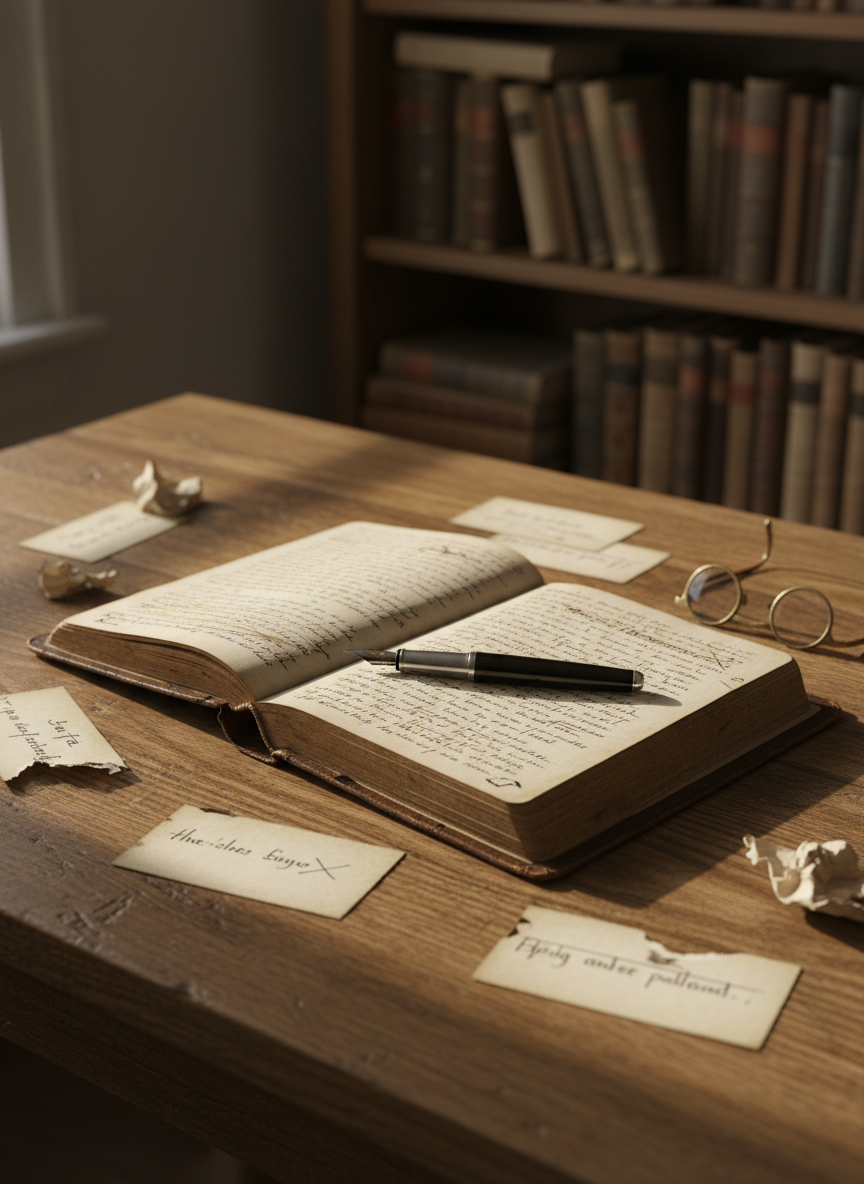
A worn, leather-bound journal lying open on an old oak desk, its cream pages filled with dense, slanted handwriting and crossed-out sentences, a fountain pen resting diagonally across the center crease. Around it, scattered index cards and a single cracked reading glass lens suggest attempts and revisions. Soft late-afternoon window light pours in from the left, illuminating the texture of the paper and casting long, thoughtful shadows across the desk’s grain. In the softly blurred background, a bookshelf of mismatched volumes fades into darkness. Photographic realism, shot at a slightly elevated angle with a shallow depth of field, creates an intimate, contemplative atmosphere that feels like entering the quiet interior of someone’s memory and reflective failure.

Reading Failure as Sacred Practice

These essays invite you to linger with broken plans, unreliable memories, and uncomfortable questions, not to fix them, but to listen for what they reveal about attention, surrender, and the quiet, stubborn hope that outlives success.